You Are Not Broken: Healing and Hope for Survivors of Childhood Trauma
If you experienced abuse or trauma as a child, you may carry the weight of it every day — in your body, in your relationships, in the quiet moments when your mind won't rest. You may wonder if something is permanently wrong with you. It is not. What happened to you changed the way your brain and body learned to protect you, but those changes are not permanent and they are not who you are. This article is for you — for every survivor, of every age and background — and it was written with one truth at its center: healing is real, it is possible, and you deserve it.

You Are Not Alone
 One of the most painful parts of surviving childhood trauma is the feeling that you are the only one. That what happened to you set you apart from everyone else. That if people really knew, they would see you differently.
The truth is that childhood trauma is far more common than most people realize. According to the Centers for Disease Control and Prevention (CDC), nearly two out of every three adults in the United States — 63.9 percent — have experienced at least one adverse childhood experience (ACE), which includes physical, emotional, or sexual abuse, neglect, and household challenges like substance abuse or domestic violence. One in six adults — 17.3 percent — has experienced four or more ACEs. These numbers come from a CDC analysis of data collected across all 50 states and the District of Columbia between 2011 and 2020, making it the most comprehensive look at ACE prevalence in the country.
These are not rare experiences happening to a small number of people. They are happening everywhere — in every community, every income level, every race and background. If you are a survivor, you are surrounded by other survivors, many of whom are carrying the same silence you carry. You are not alone. You never were.
What Childhood Trauma Does — And Why It Is Not Your Fault
When a child experiences abuse, neglect, or ongoing fear, the brain does exactly what it is designed to do: it adapts to survive. The parts of the brain that detect danger — particularly the amygdala — become more active. The parts that help with reasoning, calming down, and feeling safe — the prefrontal cortex — may develop differently. The body's stress response system, which is supposed to activate briefly and then turn off, can get stuck in an "always on" position.
This is not a flaw. This is your brain doing its job under impossible conditions. A child living in an unsafe environment needs a brain that is hyperaware of danger. The problem is that these survival adaptations — the hypervigilance, the difficulty trusting, the emotional flooding, the numbness, the chronic tension in your body — do not automatically shut off when the danger ends. They can follow you into adulthood, showing up in ways that feel confusing, exhausting, or even shameful.
Researchers at the University of Rochester Medical Center have identified how trauma can alter the brain's salience network — the system used for learning and survival — in people exposed to childhood adversity, including those with and without a PTSD diagnosis. As one clinician at the university's HEAL Collaborative put it: "We can't change our past, but we can change our relationship to it."
If you struggle with trust, with anger, with relationships, with sleep, with chronic pain, with feelings of worthlessness — these are not character defects. They are the echoes of what you survived. And they can change.
Your Brain Can Heal: The Science of Neuroplasticity
One of the most important discoveries in brain science over the past several decades is neuroplasticity — the brain's ability to form new connections and pathways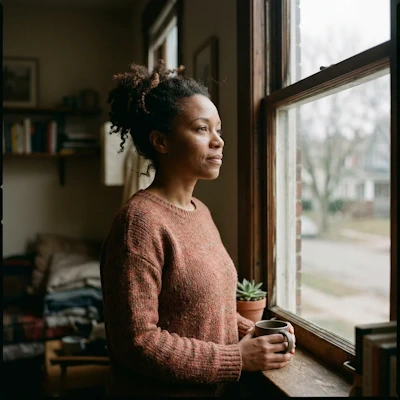 throughout your entire life. This means that the brain changes caused by trauma are not set in stone. With the right support and practice, your brain can literally rewire itself.
Neuroplasticity is not just a theory. Research has shown that therapy approaches like Cognitive Behavioral Therapy (CBT) can increase gray matter volume in the prefrontal cortex — the part of the brain responsible for decision-making and emotional regulation. A major study by the Department of Veterans Affairs found that after just 10 weeks of CBT, 75 percent of participants improved significantly, and 47 percent no longer met the criteria for PTSD at all. As Dr. Paula Schnurr, executive director of the VA's National Center for PTSD, has said: "We used to think that PTSD was chronic and that we had to help people live with their symptoms. We now know that PTSD is treatable."
Betsy Kanarowski, the chief clinical officer at Saprea — an organization that helps women heal from childhood sexual abuse — put it simply: "It's not a hopeless thing that will be automatic forever. Brains are amazing. As you work on making new neural pathways in response to trauma, you can work on changing how those trauma triggers are affecting you. It's hard work, but that's the great thing about the brain."
Every time you practice a grounding technique, challenge a harmful belief about yourself, move your body intentionally, or sit with a safe person and allow yourself to be seen — you are building new neural pathways. You are teaching your brain that the danger has passed. That is not wishful thinking. That is science.
What Healing Actually Looks Like
 Healing from childhood trauma is not a straight line. It does not follow a schedule, and it does not look the same for everyone. Some days will feel like enormous progress. Other days will feel like you are back at the beginning. Both of those days are part of healing.
Healing does not mean forgetting what happened. It does not mean the memories stop hurting entirely. It means that the past gradually loses its grip on the present. It means that over time, you respond to life as it is now — not as it was then. It means you begin to feel things you may not have felt in a long time: safety, connection, even joy.
Healing often begins with one thing above all else: the recognition that what happened to you was not your fault. As the organization RAINN (Rape, Abuse & Incest National Network) emphasizes in its guidance for survivors, addressing self-blame is one of the most critical first steps. Many survivors carry the belief — planted by their abuser, reinforced by silence, or absorbed through years of shame — that they caused what happened. They did not. Abuse is always the responsibility of the person who committed it. Always.
One affirmation that many therapists recommend: "What happened to me was wrong. I didn't cause it. I didn't deserve it." It may feel hollow at first. That is normal. Say it anyway. Over time, with repetition and support, your brain begins to accept the truth it already deserves to hear.
Pathways to Healing: Therapies That Work
There is no single "right" therapy for every survivor. What works depends on your history, your preferences, your body, and where you are in your healing. The good news is that there are more evidence-based options available today than ever before, and research continues to confirm their effectiveness.
Trauma-Focused Cognitive Behavioral Therapy (TF-CBT)
TF-CBT combines trauma-sensitive approaches with cognitive behavioral techniques. It helps survivors identify and challenge the negative thought patterns that trauma created — beliefs like "I am not safe anywhere" or "I am unworthy of love" — and replace them with more accurate ones. Originally developed for children and adolescents, its principles are widely applied with adults as well. Research shows that CBT directly engages neuroplasticity by strengthening the prefrontal cortex and reducing overactivity in the amygdala.
Eye Movement Desensitization and Reprocessing (EMDR)
EMDR uses a technique called bilateral stimulation — typically guided eye movements, taps, or sounds — while you briefly focus on a traumatic memory. This process appears to help the brain reprocess the memory in a way that reduces its emotional charge. One of the most important things about EMDR is that it does not require you to talk about your trauma in detail, which can be a relief for survivors who find that overwhelming. EMDR has strong research support and can sometimes produce significant results in a relatively short period of time.
Somatic Experiencing and Body-Based Therapies
Developed by Dr. Peter Levine, Somatic Experiencing is built on the understanding that trauma is not just stored in the mind — it is stored in the body. Many survivors experience chronic tension, pain, numbness, or a feeling of being "frozen." Somatic therapies work directly with the body's sensations and nervous system to help release the physical energy that got stuck during traumatic events. This may include gentle movement, breathwork, body awareness exercises, or trauma-sensitive yoga. As Saprea's research-backed approach emphasizes, "engaging the physical body and helping the body reintegrate with the brain is an important and critical part of healing from child sexual abuse."
Dialectical Behavior Therapy (DBT)
DBT combines cognitive-behavioral techniques with mindfulness practices and is particularly helpful for people who experience intense emotions, difficulty with relationships, or patterns of self-harm. DBT teaches concrete skills for emotional regulation, distress tolerance, and interpersonal effectiveness — tools that many survivors find immediately useful in daily life.
Expressive Writing and Creative Therapies
 A 2025 study published in the Journal of Trauma & Dissociation found that an online expressive writing program significantly reduced post-traumatic stress symptoms in survivors of childhood trauma, with benefits maintained for at least three months after the intervention. Writing, art, music, and other creative outlets can provide a way to process emotions that may be too difficult to put into spoken words — and they can be practiced at home, on your own schedule, as part of a broader healing plan.
Finding the right therapist matters as much as finding the right type of therapy. Look for someone who is specifically experienced with childhood trauma, who makes you feel safe, and who works at your pace. If the first therapist is not the right fit, that does not mean therapy has failed — it means you have not yet found the right match. Keep looking.
Tools You Can Use Today
While professional support is an important part of healing, there are things you can begin doing right now — small, practical actions that can help regulate your nervous system and build new patterns of safety in your brain.
Grounding Techniques
Grounding is a way of pulling yourself back into the present moment when your mind or body feels pulled into the past. The Substance Abuse and Mental Health Services Administration (SAMHSA) recommends grounding as a core tool for managing trauma responses. Some approaches you can try:
- The 5-4-3-2-1 method: Name five things you can see, four you can touch, three you can hear, two you can smell, and one you can taste. This engages your senses and anchors you in the here and now.
- Physical grounding: Press your feet firmly into the floor. Hold something cold, like an ice cube, or something textured. Splash cold water on the back of your neck. These sensations remind your body where and when you are.
- Cognitive grounding: State the current date, your age, and where you are. If you are having a flashback, remind yourself: "That was then. This is now. I am safe in this moment."
- Movement: Gentle stretching, walking, or pressing your palms together can help discharge the physical tension that trauma holds in the body.
Self-Compassion Practices
Many survivors are their own harshest critics. Practicing self-compassion is not about ignoring what is hard — it is about treating yourself with the same care you would offer a friend. Small, consistent practices can reshape how you relate to yourself:
- Place a hand on your chest and take three slow breaths. This simple gesture signals safety to your nervous system.
- Write yourself a short note of compassion — even one sentence: "I am doing the best I can, and that is enough."
- When you notice self-critical thoughts, try gently replacing them: instead of "What is wrong with me?" try "I am responding to something painful that happened, and I am learning a new way."
Building a Safety Routine
Predictability and routine can be deeply healing for a nervous system that grew up in chaos. Consider building small rituals of safety into your day:
- A consistent morning routine that signals to your body: today is calm.
- A regular bedtime practice — dim lights, calming sounds, a warm drink — that helps ease the hypervigilance that often intensifies at night.
- A "safe object" you carry with you — a smooth stone, a piece of fabric, a small item that you associate with comfort — that you can touch when you feel activated.
The Power of Connection
Trauma often happens in relationships — and so does healing. One of the strongest findings in recovery research is that supportive, safe relationships are among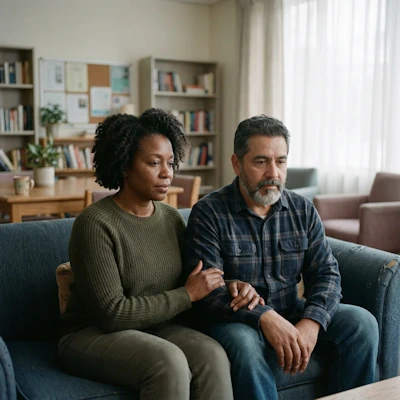 the most powerful tools for healing from childhood trauma. This does not mean you need to have a large social circle or trust everyone. It means finding even one person — a therapist, a friend, a support group member, a mentor — with whom you can be honest and feel safe.
Community-based approaches to healing are showing remarkable results. Saprea, an organization dedicated to helping survivors of childhood sexual abuse, has built its entire model around the healing power of community — combining group counseling, retreats, support groups, and online resources. Their approach is informed by the growing body of research showing that when survivors connect with others who share similar experiences, they experience reduced isolation, increased resilience, and a stronger sense of belonging.
RAINN emphasizes that healing relationships do not have to be perfect — they just have to be safe. "Start small," their guidance suggests. "Engage in relationships that are mutual, respectful, and affirming. Set clear boundaries and communicate your needs. Give it time. Healing attachment wounds takes practice and patience — but every healthy connection is a step toward trust."
Support groups, whether in person or online, can be particularly powerful. Hearing others speak about experiences similar to your own — and being heard in return — can break through the isolation that so many survivors carry. You do not have to share your full story. You just have to show up.
Post-Traumatic Growth: Not Just Surviving, but Becoming
In the mid-1990s, psychologists Richard Tedeschi and Lawrence Calhoun developed a concept called post-traumatic growth (PTG) — the idea that people who endure deep psychological struggle following trauma can experience meaningful, positive changes in their lives. PTG is not about being grateful for what happened. It is about recognizing that through the painful process of putting your life back together, something new can emerge.
Tedeschi and Calhoun identified five areas where survivors commonly experience growth:
- Personal strength: Discovering that you are stronger than you knew — that you survived the unsurvivable, and you can face what comes next.
- Deeper relationships: Finding new levels of closeness, empathy, and connection with others who understand.
- Greater appreciation for life: Noticing beauty, meaning, and gratitude in moments that once passed unnoticed.
- New possibilities: Seeing paths forward that did not exist before — new purposes, new roles, new directions.
- Spiritual or existential change: A deepened sense of meaning, whether through faith, philosophy, or a new understanding of what matters most.
Tedeschi estimates that roughly half to two-thirds of people who go through significant trauma experience some form of post-traumatic growth. A 2022 study published in the International Journal of Environmental Research and Public Health found that post-traumatic growth among survivors of interpersonal violence included "confronting one's own feelings more freely, consciously nourishing inner strength, having deeper relations to others, experiencing personal growth, living a more wholesome life, and having deeper self-knowledge as well as a stronger self-image." The researchers described PTG as something akin to "a personal resurrection in life following psychological trauma."
A 2026 qualitative study published in the Pakistan Journal of Humanities and Social Sciences explored how adult survivors of childhood trauma with PTSD made meaning from their experiences. The researchers found three main pathways: perspective shifts, identity reconstruction, and resilience as a coping mechanism. Survivors described meaning-making as "a continuous process of reconstructing a life story with trauma experiences included" — not erasing the past, but weaving it into a larger, more complete narrative.
Growth does not mean the pain disappears. It means that alongside the pain, something powerful can grow. Many survivors find that their experiences, once a source of only shame, become a source of purpose — a reason to help others, to advocate for change, to live with a depth and intentionality that they might not have found otherwise.
Reclaiming Your Identity
 One of the deepest wounds of childhood trauma is the way it can steal your sense of self. When survival becomes the only priority in a child's life, there is no room to explore who you are, what you love, or what you want. Many survivors reach adulthood without a clear sense of identity — not because they lack one, but because they never had the safety to discover it.
Reclaiming your identity is not about becoming a completely new person. It is about uncovering the person who was always there, underneath the survival responses. This process takes time, and it often happens in small moments:
- Trying a new hobby and noticing what brings you joy.
- Setting a boundary for the first time and realizing you have the right to protect your peace.
- Writing in a journal and hearing your own voice, perhaps for the first time in years.
- Looking in the mirror and saying something kind to yourself — even if it feels strange at first.
As Dr. Kate Truitt, a clinical psychologist specializing in trauma, writes: "You are not defined by what happened to you. You are defined by how you choose to heal. Every tiny moment of kindness you offer yourself is a step forward." She reminds survivors: "You are not broken. You are becoming whole."
A Word to Survivors at Every Stage
Whether you are just beginning to acknowledge what happened, or you have been in recovery for years, your place on this journey is valid. Healing does not have an expiration date. There is no age at which it is "too late" and no point at which you should be "over it."
If you are just starting
It takes enormous courage to even look at what happened. You do not need to do everything at once. Start with one small step — reading this article may be that step. Consider reaching out to a helpline, a therapist, or a support group when you are ready. There is no rush.
If you are in the middle of it
The middle of healing can feel like the hardest part. You are no longer numb, which means you feel more — and that can be overwhelming. This is not a sign that things are getting worse. It is often a sign that things are moving. Stay connected to your support. Be gentle with yourself on the hard days.
If you have been healing for a long time
You know that healing is not a destination. There may still be moments that catch you off guard — a trigger you did not expect, a wave of grief that surprises you. This does not undo your progress. It means you are human, and your healing is deep enough to keep reaching new layers. Honor how far you have come.
You Deserve to Heal
Wherever you are in your journey — whatever your age, your gender, your background, your story — you deserve to heal. Not because you have earned it, and not because you have to prove anything. You deserve it because you are a human being who survived something that should never have happened, and the life that stretches out in front of you belongs to you.
The science is clear: your brain can change. Your body can release what it has been carrying. Your relationships can become places of safety instead of fear. Your story does not end with what was done to you. It continues with what you build next.
You are not broken. You are healing. And you do not have to do it alone.
Sources and Resources
- Centers for Disease Control and Prevention — Prevalence of Adverse Childhood Experiences Among U.S. Adults (MMWR, 2023)
- American Psychological Association — Growth After Trauma
- RAINN — Healing After Child Sexual Abuse: A Guide for Survivors
- Stand Together — Neuroplasticity Healing Is Helping People Heal From Trauma and Abuse
- University of Rochester Medical Center — How Childhood Trauma May Impact Adults
- International Journal of Environmental Research and Public Health — The Post-Traumatic Growth Journey (PMC, 2022)
- Pakistan Journal of Humanities and Social Sciences — Meaning Making of Life After Childhood Trauma (2026)
- Journal of Trauma & Dissociation — Expressive Writing Intervention Outcomes for Childhood Trauma Survivors (2025)
- Journal of Traumatic Stress — The Posttraumatic Growth Inventory: Tedeschi & Calhoun (1996)
- CNS Healthcare — The Science Behind Adverse Childhood Experiences Recovery
- SAMHSA's Six Principles of Trauma-Informed Care
- Dr. Kate Truitt — Trauma Is Not Your Story: Reclaim Your Identity After Abuse
- Bravehearts — Grounding Techniques for Survivors of Abuse
- Stand Together — Healing From Trauma: How Community Helps Survivors
- Mother Jones — What The Body Keeps the Score Gets Right About Trauma Recovery (2024)
- Healthcare (MDPI) — Healing Bodies, Healing Communities: Adult Survivors of Childhood Sexual Trauma (2025)