Father Could Face Up to 100 Years in Prison After Abuse Conviction; Mother Pleads to Neglect
Prince George’s County, MD — A father faces up to 100 years in prison and a mother has pleaded guilty to child neglect after a major child abuse case rocked the community.
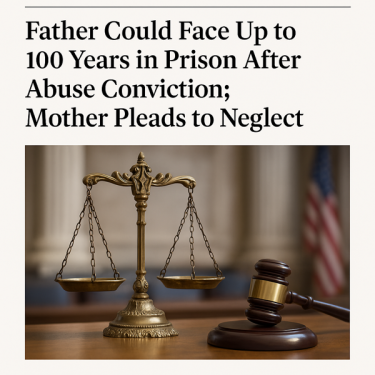 Upper Marlboro, MD — In a harrowing case of familial abuse, Prince George’s County prosecutors announced that Rishaud Dickens, age 35 and father of four, was convicted on four counts of first‑degree child abuse. The county’s State’s Attorney, Tara Jackson, revealed that Dickens faces up to 25 years per count — a maximum total sentence of 100 years — when he is formally sentenced on January 16, 2026.
Meanwhile, the children’s mother, Tierra Kelly, age 32, has pleaded guilty to 11 counts of child neglect.
Investigation & Prosecution
The case began in February 2024 following a 911 call. Investigators from the Prince George’s County Child and Vulnerable Adult Abuse Unit launched an inquiry into allegations that Dickens had physically abused four of his children.
Prosecutor Jackson described the case as “heartbreaking and infuriating,” underscoring the betrayal in situations where care and protection should be foundational in a family. She emphasized that no child should be made to suffer harm at the hands of their caregivers.
“Our office will continue to aggressively prosecute child abuse cases and fight for the safety of every child in our community,” Jackson added.
Implications & The Blue Ribbon Project Response
This case is a tragic illustration of the vulnerabilities children face when those responsible for their welfare commit abuse or neglect. At The Blue Ribbon Project, our mission is to elevate awareness, support prevention efforts, and help communities respond when tragedies like this occur.
Key takeaways from this case include:
• The importance of prompt intervention when abuse is suspected
• The need for robust systems to protect children, report suspicion, and ensure accountability
• The vital role of support networks for families under stress
We echo the prosecuting attorney’s resolve: that perpetrators must be held fully accountable, and that children deserve safety and justice.
What You Can Do
If you suspect a child is in danger:
1. Report it. Call your local child protective services or police.
2. Support prevention efforts. Encourage local investment in family support, counseling, and education.
3. Spread awareness. Use your voice (social media, local networks, workplaces) to promote safe, protective environments for children.
At The Blue Ribbon Project, we will continue to follow this case and similar ones, offering resources and advocacy to ensure every child’s right to safety is upheld.
Contact us for more information or to partner with The Blue Ribbon Project in community outreach efforts or prevention programming.
---
Disclaimer: This article is intended for awareness and advocacy. All charges stated are based on public prosecutorial statements, and defendants are presumed innocent until proven guilty in court.